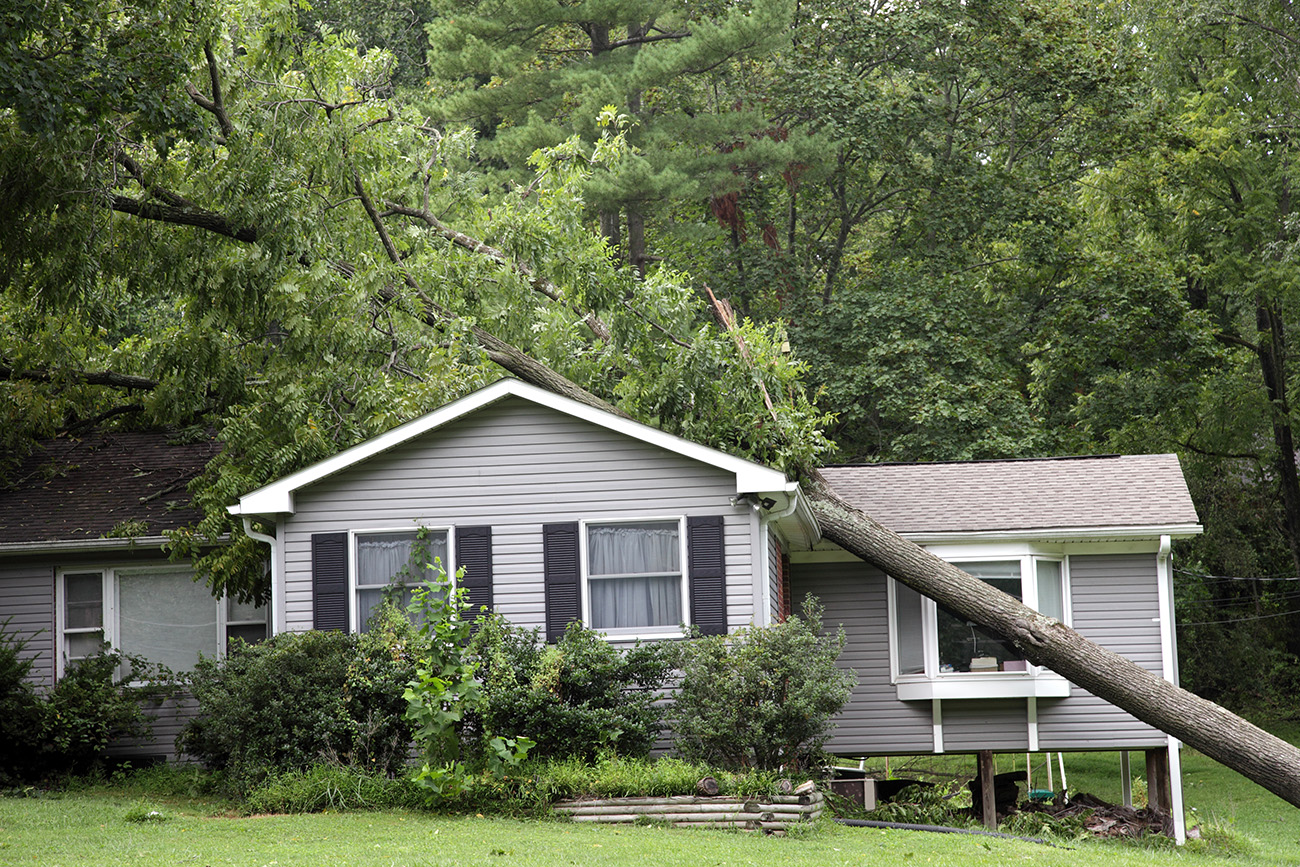
Severe storms can turn a home’s trees into costly hazards in minutes. In the Midwest, a strong storm in August 2026 led to a loss of more than 80% of the tree canopy in areas of northern Indiana, according to the National Weather Service. Trees were uprooted, snapped and stripped of limbs, with some falling on homes. For homeowners, tree damage can create immediate safety hazards and leave trees vulnerable to disease and pests.
The cost of cleanup and replacement can be significant. Professional tree removal costs average about $750, with prices ranging up to $10,000 depending on the tree’s size, location and accessibility, according to Angi. Replacement of large trees, which typically suffer the most damage during severe storms, can cost as much as $4,000 per tree, Fixr says.
When severe weather packs a punch, your trees can better withstand it and recover if you take precautions throughout the year.
Stressors That Cause Tree Damage
Trees face stressors including compacted soil, limited root space, construction damage, road salt, drought and improper planting or pruning, says Paul Abbey, founder and CEO of Rooted in Trees, a nonprofit focused on restoring the tree canopy in Northeast Ohio.
“Severe weather can add to that stress, leading to broken branches, trunk damage and other wounds that leave trees more susceptible to problems,” says Chris Marshall, an arborist and district manager for The Davey Tree Expert Company in Warminster, Pa. A tree that’s already stressed by its growing conditions may have a harder time recovering from a storm or defending itself against pests and disease, he adds.
Help Trees Stand Up to Storms
You can reduce your trees’ vulnerability by maintaining healthy soil, protecting the root zone and addressing problems early. Consider and monitor these key factors:
- Watering: Water newly planted trees regularly — one to three times a week or even more often during dry periods. Mature trees generally require less water, possibly one to two times a month, but it depends on your climate and growing zone.
- Mulching: Mulch can help retain moisture, but avoid piling it against the trunk, Marshall says. He recommends a two- to four-inch layer.
- Pruning: Proper pruning can help maintain a tree’s structure and remove deadwood before it becomes a hazard.
- Location: When planting new trees consider the mature size of the tree and its proximity to homes, sidewalks and utilities. A tree planted too close to a structure can cause problems if it loses large limbs or is uprooted during severe weather.
- Tree selection: To better protect trees from wind, select them carefully. The USDA Natural Resources Conservation Service recommends choosing trees that resist stem and branch breakage from high winds, ice or snow. Iowa State University Extension lists storm-resistant trees such as American hornbeam, bald cypress, ginkgo, Kentucky coffeetree, redbud, swamp white oak and white oak. Proper maintenance and pruning still play an important role.
Check Trees After a Storm
A damaged tree can pose a serious safety hazard, particularly after a major storm. Stay away from trees with hanging branches. Nearby broken power lines may still be live, and large limbs can fall without warning. Let trained professionals handle large or high branches and trees that are near power lines or have begun leaning after a storm.
Signs of Tree Damage
Watch out for these conditions:
- Thinning canopy: Fewer or smaller leaves than usual or an uneven canopy.
- Early leaf drop or color change: Especially an issue if nearby trees look healthy.
- Dead, cracked or split branches: Might indicate structural issues.
- Mushrooms or fungal growth: A possible sign of decay or root problems.
- Sudden leaning or disturbed soil: Could result from tree instability or root damage.
- Decay or cavities: Check the trunk and exposed roots, Marshall says.
Continue to watch trees in the weeks and months after a storm. “A particularly important warning sign is a sudden change,” Abbey says. “If a tree that looked healthy last year suddenly looks very different, don’t ignore it.”
Storm Damage Can Lead to Other Problems
Oak trees may be particularly vulnerable post-storm, especially in the Midwest.
Look for symptoms of oak wilt: Be aware of “oak wilt,” a fungal disease that can cause unusual leaf discoloration, wilting, premature leaf drop and rapid decline, Abbey says. Those symptoms can resemble damage from drought, insects or other environmental stress, making professional diagnosis especially important.
Know when to prune: Avoid unnecessary pruning or wounding of healthy oaks, especially when the disease is most likely to spread, Abbey advises. In Ohio, January and February — when the weather is generally the coldest and the risk of spreading oak wilt is lower — are usually the safest time to prune healthy oak trees.
Check the ground: Pay attention to the ground around a tree. Recent construction, trenching, grade changes or heavy soil compaction can further damage roots and weaken trees even when the damage above ground isn’t as obvious.
Call an Arborist for Tree Damage Repair
If you’re unsure how to diagnose or safely address a problem, particularly after storm damage, look for an arborist. They should be certified, licensed and insured, and ask about credentials and references.
Routine tree inspections can also catch potential vulnerabilities before they become storm-related emergencies. Basic visual inspections may be available at no cost, while a more comprehensive tree inspection can average $100 to $250, according to Angi.
Not every damaged or aging tree needs to come down. When a tree can be safely preserved, arborists can advise on how to do so.
Think of trees as assets rather than simply landscaping, Abbey advises. They add shade, reduce energy bills, and improve curb appeal. “A mature tree can add beauty and character to a home,” he adds. Unlike many other improvements we make to a home, a healthy tree can become more valuable with time.”
Melissa Dittmann Tracey is an award-winning journalist covering the housing market. You can hear her weekly as the host of Real Estate Today. She is also the creator of the Styled, Staged & Sold blog and a contributing editor for REALTOR® News. Follow her on Instagram @housingmuse.
